Starting yoga is much easier than it seems at first glance. You don't need a complete yoga outfit, your own space, or a lot of time.
A good yoga mat, comfortable clothing, and a yoga block for support are perfectly sufficient for getting started. Something else is much more important: to begin.
Without pressure to perform. Without the expectation of perfecting a pose immediately. And especially without comparing yourself to others.
Yoga is a very personal practice. Over time, you'll develop your own rhythm, discover the yoga style that suits you, and find a teacher with whom you feel comfortable.
I'm starting yoga. What basic equipment do I need?
Basically, there are three things: a good yoga mat, clothing that allows for plenty of freedom of movement, and a yoga block as a helpful addition.
1. A good yoga mat as a secure base
If there's one point where quality pays off right from the start, it's the yoga mat.
It should lie stable and non-slip on the floor while also providing good grip for your hands and feet. Especially when you're new to a pose or still developing strength and balance, a secure surface gives you confidence in your movements.
The Yogistar Pro is one of the most frequently chosen yoga mats at the AlayaSol store. It is 6 mm thick, pleasantly cushioned, and offers good grip. The TPE material is free of plasticizers, latex, and PVC. The mat is lightweight and comes with a carrying strap.
It is an optimal beginner's mat and can be used flexibly for yoga, Pilates, or the gym – at home as well as outdoors. It is also uncomplicated and easy to clean.
2. A yoga block – versatile support for your practice
A yoga block can be very helpful, especially at the beginning.
It brings the floor a little closer when your flexibility isn't yet sufficient for a pose. It provides support and helps to adapt an asana to your own physical capabilities.
This already contains an important idea of yoga:
The body does not have to adapt to the pose. The pose can be adapted to the body.
The Yogistar Basic yoga block is made of natural cork and can be used upright, sideways, or flat depending on the exercise. One block is enough to start, two blocks offer additional possibilities for some asanas.
3. Clothing in which you can move freely
You don't need a specific yoga wardrobe to get started.
It's crucial that your clothing is comfortable, not constricting, and allows for every movement. Especially in yoga, you feel very clearly how fabrics feel on your skin.
Soft, natural materials like organic cotton feel pleasant on the skin. A small amount of elastane simultaneously ensures that the clothing remains flexible and the yoga pants can keep up with every asana.
A form-fitting yoga leggings can be just as suitable as a wider-cut yoga pants. Freedom of movement and a good body feeling are important.
With that, your basic equipment is set.
Roll out your mat and start
Especially at the beginning, it's worth consciously dedicating time to your yoga practice. Regular practice helps you get to know the asanas, develop flexibility and strength, and increasingly find your own yoga flow.
You can attend a yoga class or start at home with a video tutorial. If you don't want to look at a screen while practicing, you can place an exercise sequence next to your mat.
The Yoga Poster "Yoga Through the Day", for example, shows three asana sequences for morning, noon, and evening.
Listen to your body while practicing. A stretch may be noticeable, but never painful. Yoga is not a competition, but an expression of self-care.
Yoga moves body and mind
Yoga strengthens and stretches the body, promotes flexibility and balance, and at the same time brings calm and concentration to movement.
But yoga can go far beyond the physical aspect.
During an asana, attention is directed to one's own body: How am I standing? Where am I holding on? Where am I flexible, where am I tense? How am I breathing?
You begin to perceive your body more consciously.
From presence comes appreciation.
Stretching and opening the body can also create internal movement. You perceive boundaries, discover new spaces for movement, and perhaps this also changes your perspective on other areas of life.
Yoga is a holistic practice that connects body, mind, and soul. Even those who initially practice yoga primarily physically can benefit from its effects on flexibility, strength, balance, relaxation, and concentration.
With increasing practice, yoga can become a way to connect more deeply with oneself, to perceive one's body more consciously, and to open up to new perspectives.
Those who begin yoga also begin to perceive themselves differently. And from this perception, change can arise.
Three simple yoga exercises for special life situations
Yoga exercises can be consciously chosen based on what is currently needed. Three simple asanas are good for getting started and at the same time bring very different qualities.
The Tree – Vrksasana: when you need support
One leg supports you, the foot is firmly on the ground, and the body straightens upwards.
The tree combines rooting with balance and concentration. Especially in restless or stressful times, this pose can help to gather attention and consciously perceive one's own stance again.
The image of the tree already carries the meaning within it:
Firmly rooted and yet flexible.
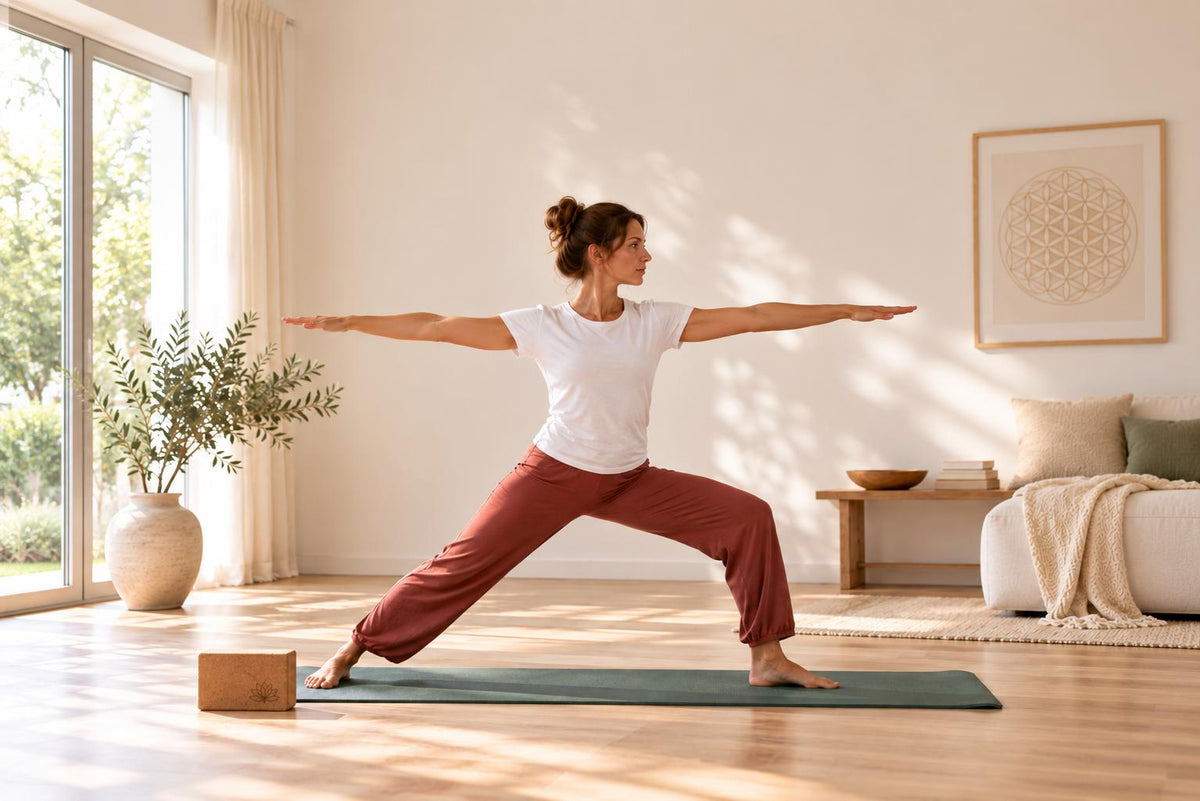
The Warrior – Virabhadrasana: when you need your strength
There are phases in life where steadfastness is required: a conflict, an important decision, or a situation that demands a lot of strength.
The warrior expresses this quality physically. The feet are firm, the body straightens up, and the pose gains strength and presence.
It's not about fighting. More exciting is the connection between outer and inner attitude:
How do I stand in this situation?
The Yoga Squat – Malasana: for grounding and opening
Especially after long periods of sitting, it feels good to bring movement back into the hips and legs. Malasana guides the body deep downwards and particularly challenges the flexibility of the hips and ankles.
Both feet are on the ground, the center of gravity sinks downwards. This gives the yoga squat a grounding and releasing quality at the same time.
However, stretching and opening in yoga not only means becoming more flexible. Conscious physical opening can also invite you to perceive ingrained patterns, let go, and make room for new perspectives.
How do I set up a yoga corner in my living room?
Those who practice yoga regularly can also create a beautiful space for their practice at home.
You don't need a separate yoga room for this. Even a corner in the living room or bedroom can become a place where you like to retreat.
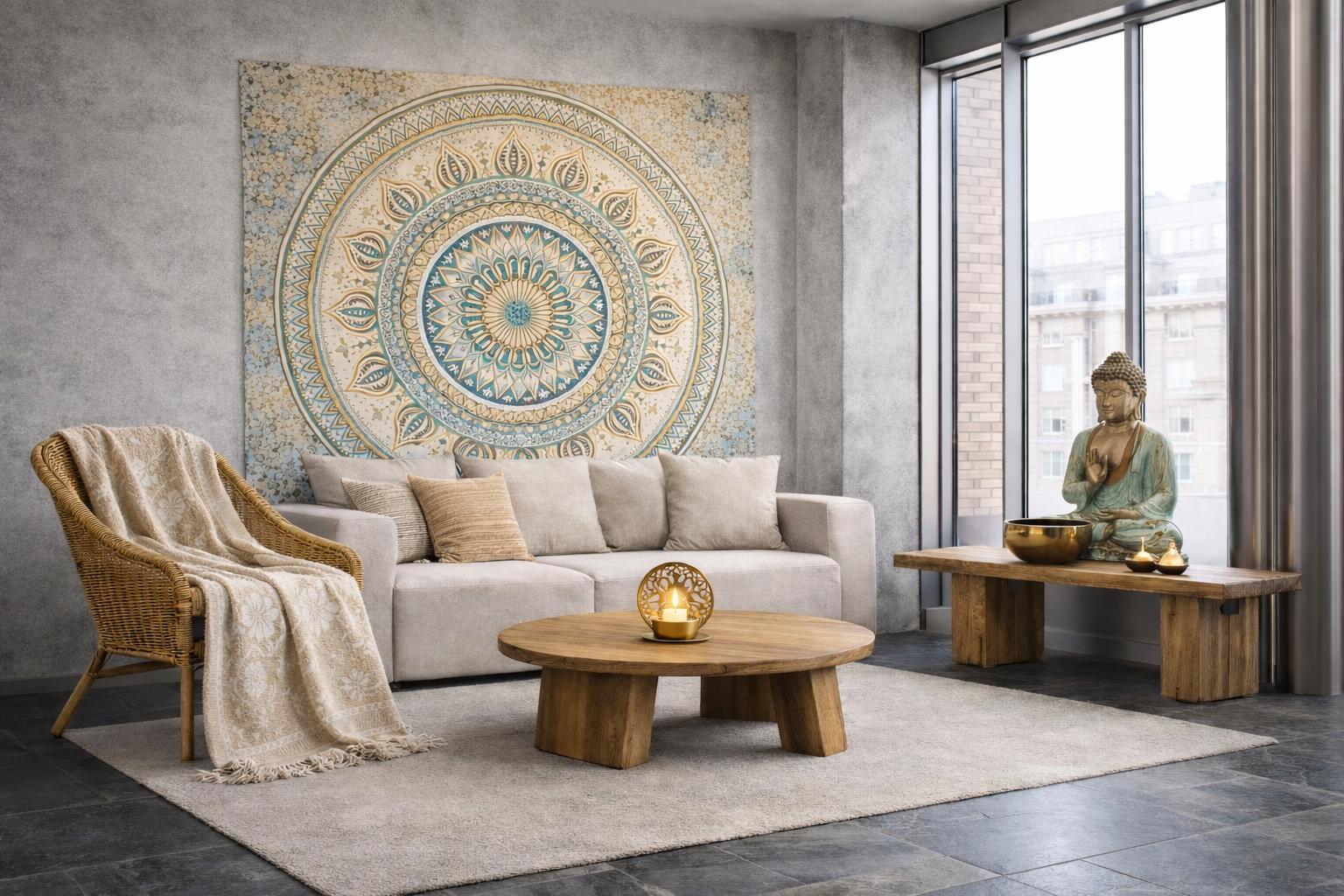
The yoga mat gets its permanent place, the yoga block and exercise instructions are within reach. A pleasant room fragrance, a Buddha figure, a chakra ornament, a candle, or another personal item create an atmosphere where you feel comfortable and enjoy practicing.
Thus, rolling out the mat already becomes a signal:
Now it's time for me!
Find your own yoga path
At the beginning, the tree still feels wobbly. Some movements are unfamiliar, and some areas of the body are less flexible than others.
That's part of yoga.
With regular practice, poses become more familiar, flexibility develops, and the breath increasingly connects with movement. Eventually, that special moment arises when a yoga class simply flows: the body is moved, stretched, and strengthened – and the mind finds peace.
Roll out your mat. Start. Feel it. And find your own way with yoga.